

How Does 7,8-DHF Become the “Natural BDNF Mimetic”?
How Does 7,8-DHF Become the “Natural BDNF Mimetic”?
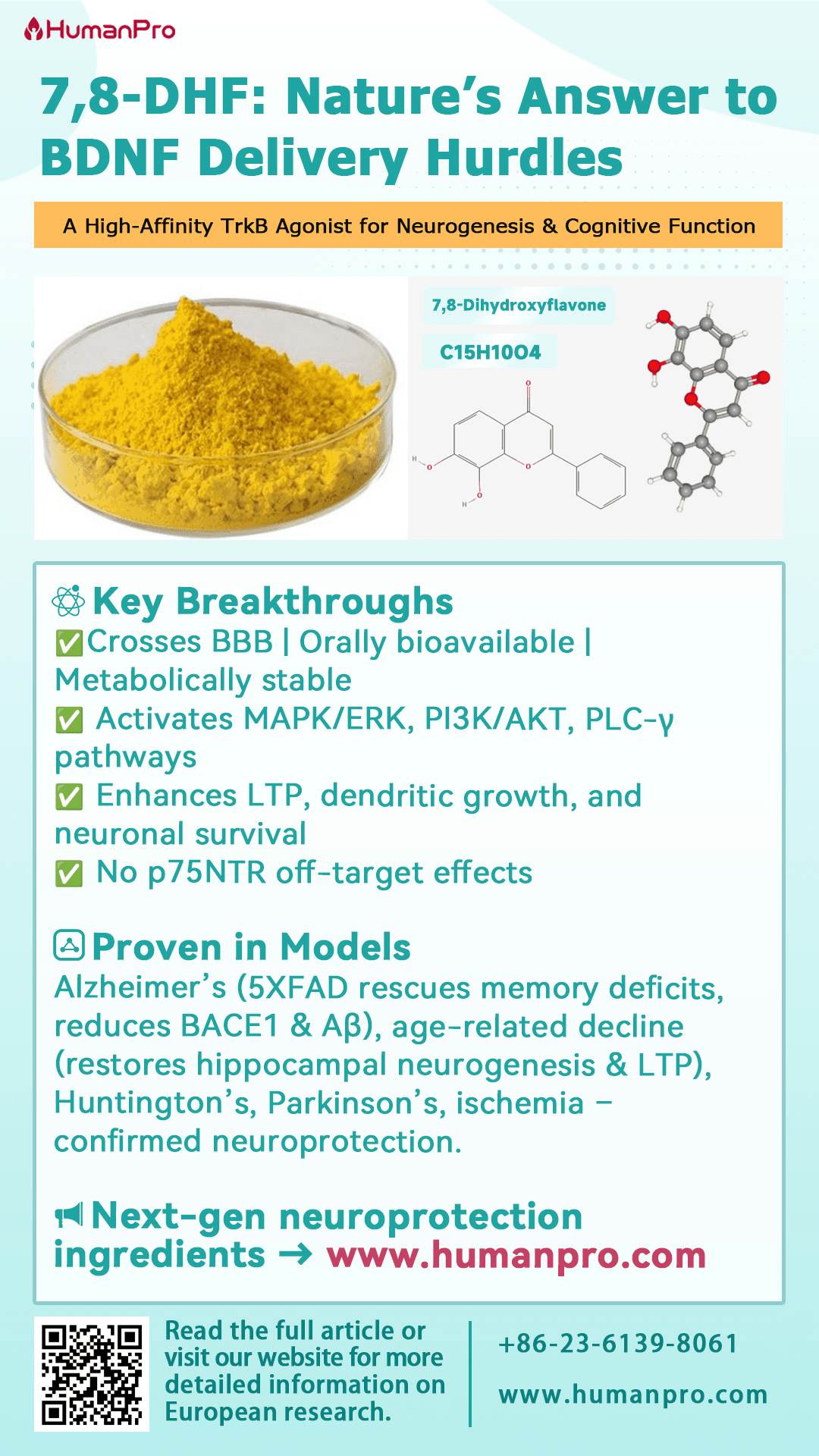
How Does 7,8-DHF Become the “Natural BDNF Mimetic”?
A Deep Dive into TrkB Agonism for Reshaping Neurogenesis and Cognitive Function
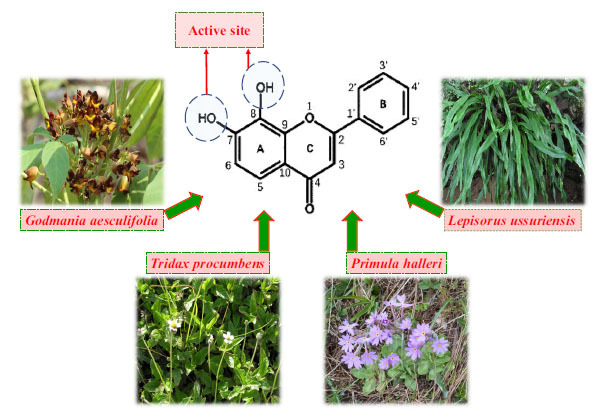
Chemical formula of 7,8-DHF, active site identification, and source plants.
The BDNF Challenge in Brain Health Brain-Derived Neurotrophic Factor (BDNF) is the master regulator of neurogenesis, synaptic plasticity, and neuronal survival. Yet its therapeutic potential has long been limited: poor blood-brain barrier penetration, short half-life, and rapid degradation make direct BDNF supplementation impractical for R&D pipelines targeting mild cognitive impairment (MCI) or neurodegenerative diseases.
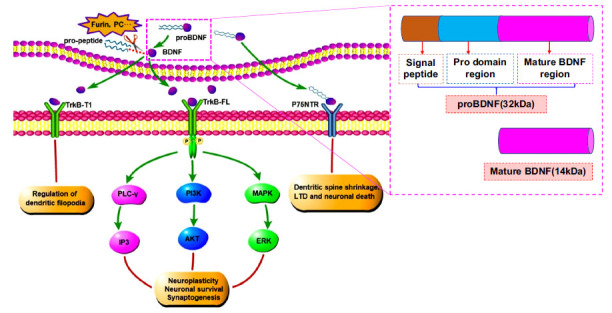
BDNF regulates neuronal plasticity, survival, and nerve growth via the PLC-γ, PI3K, and MAPK signaling pathways.
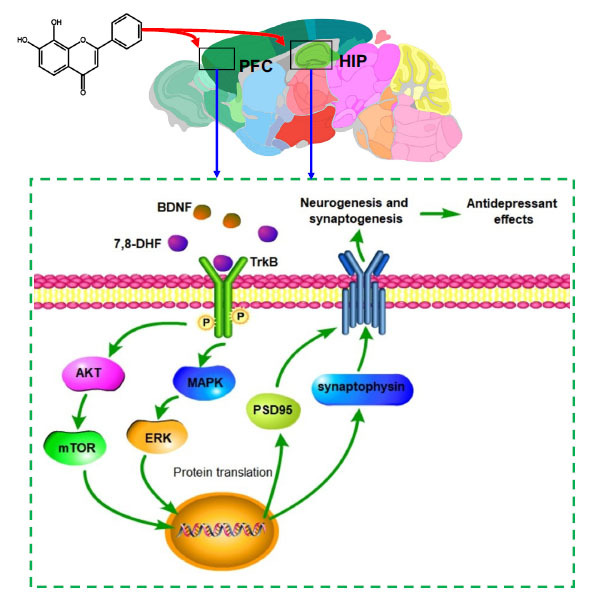
7,8-DHF crosses the blood-brain barrier, restores impaired BDNF-TrkB signaling in the PFC and hippocampus, activates downstream AKT-mTOR and MAPK-ERK pathways, and upregulates synaptic proteins PSD95 and synaptophysin, thereby exerting antidepressant effects.
7,8-DHF: a natural flavonoid and high-affinity TrkB agonist. It crosses the BBB, mimics BDNF, and avoids protein-based pharmacokinetic issues.
Step-by-Step Mechanism Dissection
Ⅰ. TrkB Receptor Activation
7,8-DHF binds the extracellular domain of TrkB, inducing receptor dimerization and autophosphorylation at key tyrosine residues. This is the critical first step that BDNF itself triggers — but 7,8-DHF does it as a stable, bioavailable mimetic.
Ⅱ. Downstream Signaling Cascade
- MAPK/ERK Pathway: Promotes neuronal differentiation, dendritic spine growth, and long-term potentiation (LTP).
- PI3K/AKT Pathway: Enhances cell survival, inhibits apoptosis, and supports synaptic protein expression (e.g., PSD-95, synaptophysin).
- PLC-γ Pathway: Further amplifies intracellular calcium signaling essential for synaptic plasticity.
Ⅲ. Advantages Over Native BDNF
- Excellent BBB penetration (demonstrated in multiple rodent models)
- Oral bioavailability and metabolic stability
- Selective TrkB activation without off-target effects on p75NTR
- Synergistic potential with existing formulation strategies (liposomal or nano-delivery further enhances brain exposure)
Latest Research Value in MCI & Neurodegenerative Models
- 5XFAD Alzheimer’s model: systemic 7,8-DHF rescued Y-maze memory deficits, reduced BACE1 and Aβ, restored hippocampal BDNF-TrkB signaling.
- Age-related cognitive decline models: enhanced hippocampal neurogenesis, improved LTP, reversed memory impairment.
- Huntington’s, Parkinson’s, ischemia models: additional neuroprotective effects confirmed.
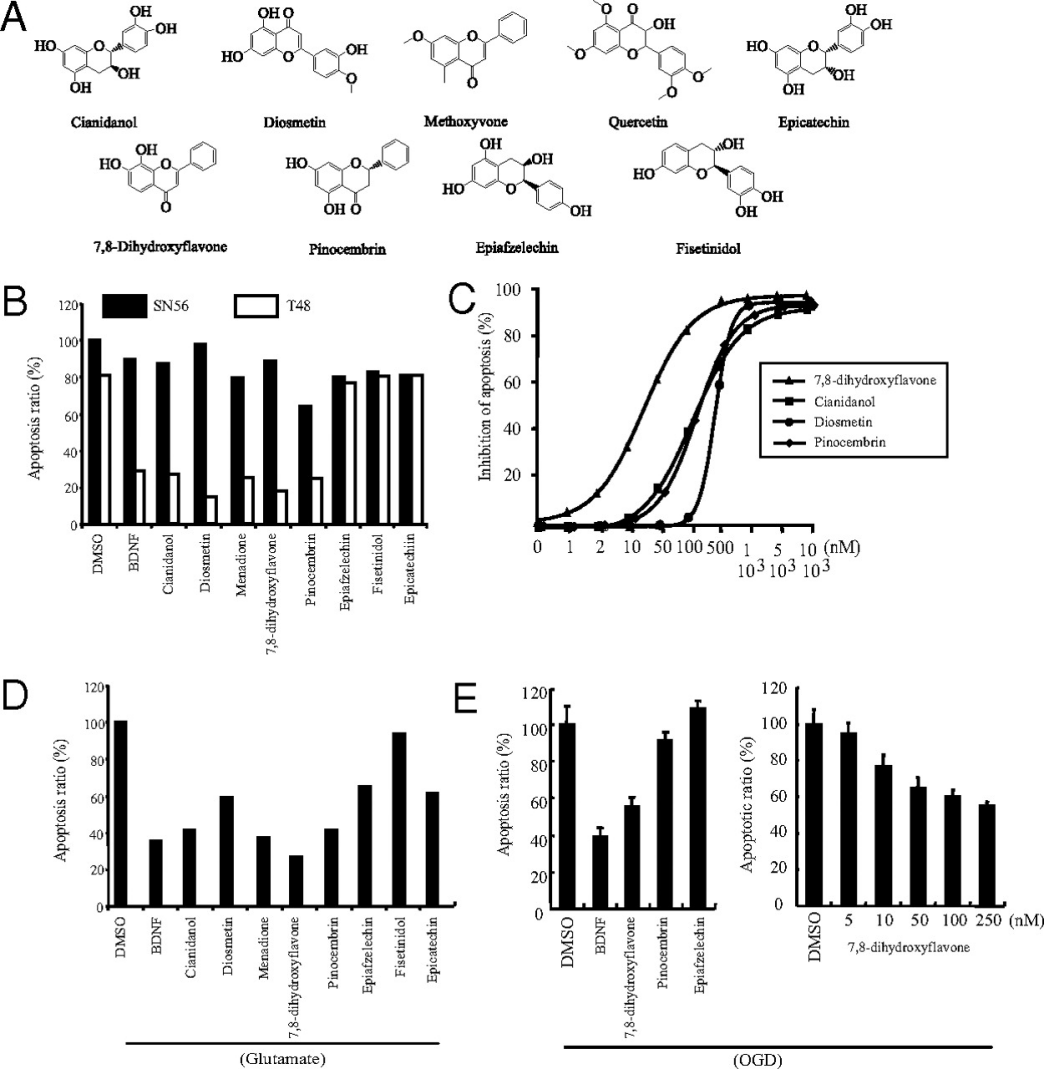
7,8-Dihydroxyflavone (7,8-DHF) protects hippocampal neurons from apoptosis: Ⅰ. Pretreatment with 7,8-DHF attenuates glutamate-induced neuronal apoptosis.
Ⅱ. In an oxygen-glucose deprivation (OGD) model, 7,8-DHF shows dose-dependent neuroprotection.
Ⅲ. The anti-apoptotic effect is concentration-dependent (EC50 determined).
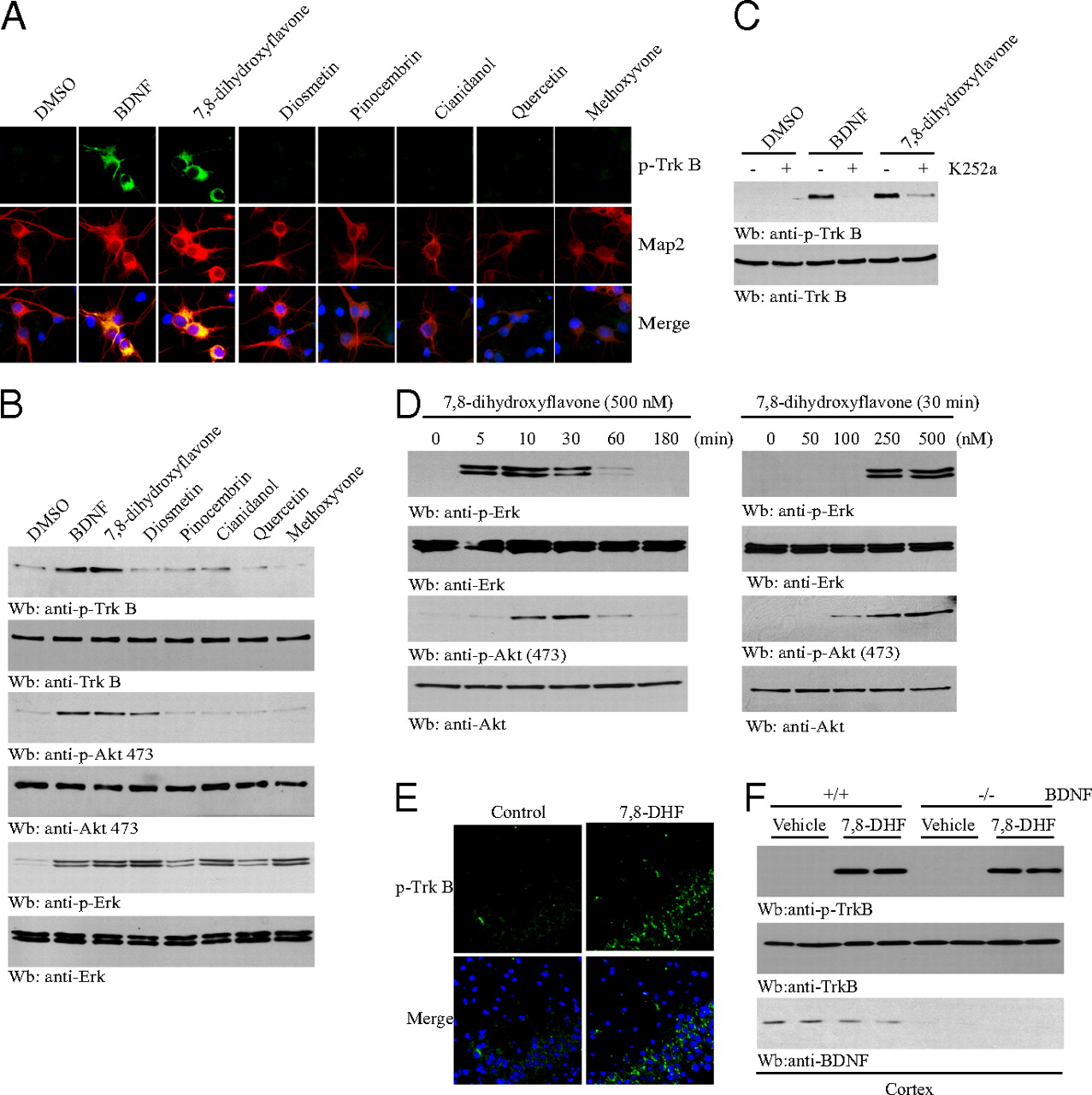
7,8-Dihydroxyflavone (7,8-DHF) elicits TrkB activation in hippocampal neurons:
Ⅰ. Induces TrkB tyrosine phosphorylation (confirmed by immunofluorescence and immunoblotting)
Ⅱ. The agonistic effect is blocked by K252a
Ⅲ. Activates downstream Akt and ERK signaling
Ⅳ. Induces TrkB phosphorylation in the cortex of BDNF conditional knockout mice (i.p. 5 mg/kg)
Humanpro Insight
For R&D teams working on nootropics, neuroprotection, or longevity formulations, 7,8-DHF represents a rare “natural mimetic” that translates mechanistic elegance into practical developability. Its ability to directly engage TrkB without the delivery hurdles of protein therapeutics makes it a compelling ingredient for next-generation cognitive health products.
Your Turn
In your neuroprotection or cognitive research, have you explored 7,8-DHF or other TrkB agonists? Any synergy with BDNF-enhancing actives or advanced delivery systems? Share your insights below — let’s advance evidence-based formulation together.
For technical data sheets & formulation support: www.humanpro.com
#Neurogenesis #BDNF #CognitiveHealth #TrkBAgonist #Neuroprotection #BrainHealth #IngredientScience #Humanpro