

Why a "Systems" View Matters in Anti-Aging
Why a "Systems" View Matters in Anti-Aging
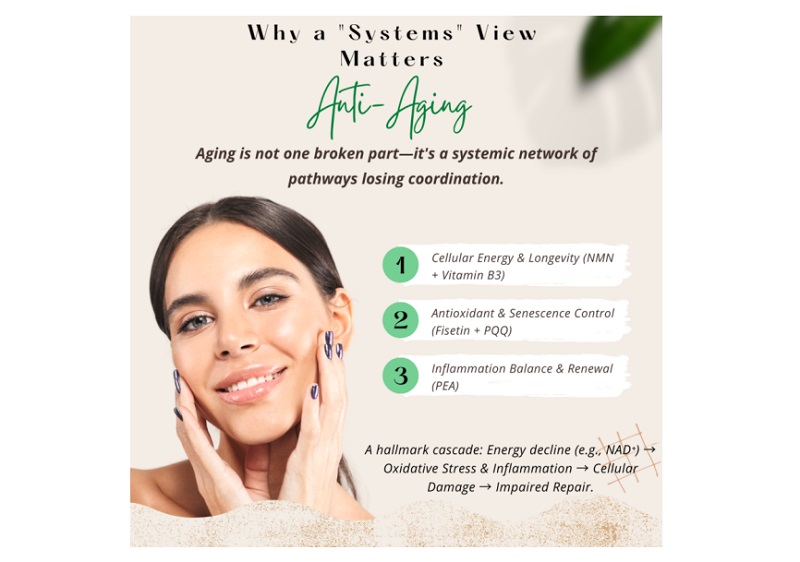
Consider a typical cascade: declining cellular energy (often tied to falling NAD+) can increase oxidative stress and chronic, low-grade inflammation. This further damages cells and impairs repair—creating a self-perpetuating cycle.
This complexity requires moving beyond "magic bullet" claims. A more rational strategy is to simultaneously support multiple linked pathways. Below is an overview of three potential modules, with the evidence level clearly noted.
Module 1: Cellular Energy & Longevity (NMN + Vitamin B3)
Preclinical studies suggest NMN, an NAD+ precursor, can help restore NAD+ levels and support mitochondrial function. Animal models indicate NMN may improve markers like insulin sensitivity and activate sirtuins, with changes associated with extended lifespan in these studies. Vitamin B3 supports NAD+ synthesis, but robust human clinical data for longevity outcomes are still developing.[1,2]
Module 2: Antioxidant & Senescence Control (Fisetin + PQQ)
Evidence from cell/animal studies shows fisetin can clear senescent cells, potentially improving tissue health. In aged mice, intermittent use is linked to extended healthspan. PQQ may support mitochondrial biogenesis in preclinical models, but its role in human aging is not yet established.[3,4,5]
Module 3: Inflammation Balance & Renewal (PEA)
Preliminary animal/cell research indicates PEA may help modulate immune responses and reduce neuroinflammation. It appears to inhibit mast cell activation and support recovery from inflammatory states. Human trials remain limited, and individual responses vary.[6,7]
✅ The Takeaway: Synergy Over Singularity
A modular strategy aims for synergistic support across pathways, better aligning with aging's networked nature than combining isolated "star" ingredients. Humanpro develops modular API and formulation solutions to support such synergistic, multi-pathway approaches in healthy aging products.
Essential Context
Individual results vary due to genetics and lifestyle. No supplement replaces foundational health practices: balanced nutrition, regular exercise, quality sleep, and stress management.
A question for our industry:
For long-term trust, is there more value in educating consumers on the interconnected "systems" of aging, or in focusing on a single "star ingredient"? I see both sides. What's your take? Feel free to share below or connect with Humanpro for discussions on evidence-based longevity formulation.
References:
1.https://pmc.ncbi.nlm.nih.gov/articles/PMC10917541/
2.https://pmc.ncbi.nlm.nih.gov/articles/PMC7238909/
3.https://pmc.ncbi.nlm.nih.gov/articles/PMC6197652/
4.https://www.fightaging.org/archives/2018/10/animal-data-shows-fisetin-to-be-a-surprisingly-effective-senolytic
5.https://pmc.ncbi.nlm.nih.gov/articles/PMC10938241/
6.https://pmc.ncbi.nlm.nih.gov/articles/PMC12189779/
7.https://pmc.ncbi.nlm.nih.gov/articles/PMC7139331/