

Fisetin: How Does It Become a Powerful Ally as a "Cellular Cleaner"?
Fisetin: How Does It Become a Powerful Ally as a "Cellular Cleaner"?
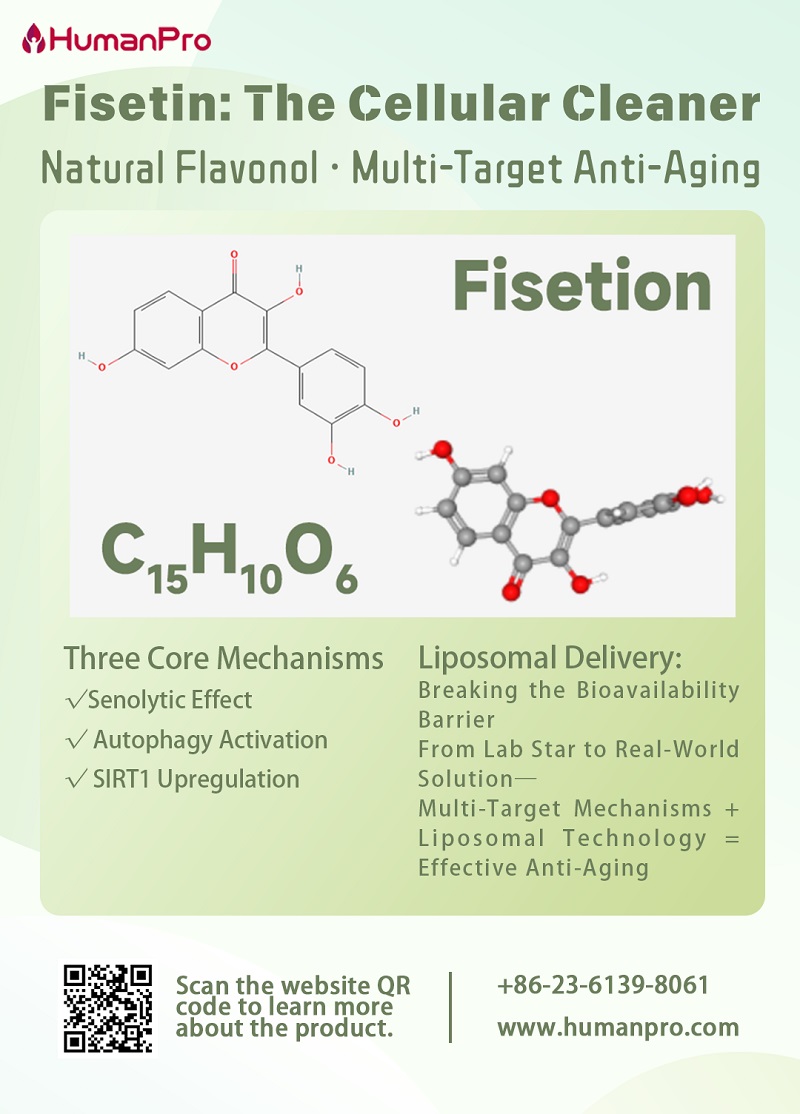
Core Mechanisms of Fisetin
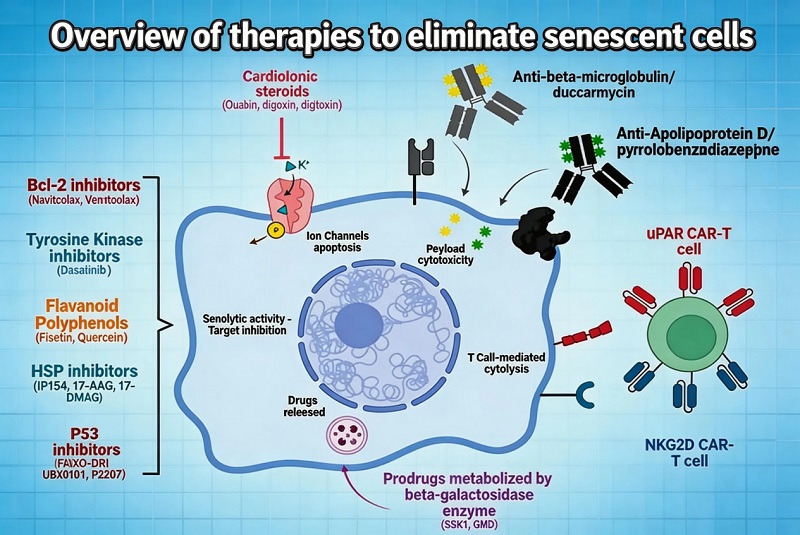
①Senolytic Effect
Senescent cells secrete pro-inflammatory factors (SASP), accelerating tissue degeneration. Fisetin selectively induces apoptosis in these cells, reducing their accumulation and alleviating chronic inflammation and functional decline—validated in animal models, earning its "cellular cleaner" title.
②Autophagy Activation
Autophagy degrades damaged proteins and organelles, maintaining mitochondrial health. Fisetin promotes autophagy initiation and degradation by inhibiting PI3K/AKT/mTOR or activating AMPK pathways, clearing oxidative stress byproducts and supporting neuroprotection and metabolic homeostasis.
③SIRT1 Activation
SIRT1 regulates inflammation, oxidative stress, and mitochondrial biogenesis. Fisetin upregulates SIRT1 expression, synergistically activating downstream FOXO and PPARγ to enhance antioxidant and anti-inflammatory effects, bolstering overall anti-aging benefits.
Liposomal Delivery: Overcoming the Bioavailability Bottleneck
Plain Fisetin suffers from extremely low aqueous solubility (<10 μg/mL) and oral bioavailability (~1-2%). Liposomal delivery changes everything:
1. Phospholipid bilayer encapsulation dramatically improves solubility and stability;
2. 100-200 nm particles enable superior intestinal uptake via M-cells and lymphatic transport;
3. PEGylation or ligand modification allows tissue-specific targeting (especially brain and skeletal muscle);
4. PK studies show 5-8× higher AUC and Cmax, with significantly increased brain exposure.
This means the same dose now actually reaches the target cells — turning elegant mechanisms into measurable efficacy. A decisive upgrade direction for functional foods, dietary supplements, and premium anti-aging skincare.
Summary & R&D Perspective
Fisetin's multi-target action (senolytic + autophagy + SIRT1) positions it as a high-potential anti-aging ingredient. Liposomal delivery transforms it from a "lab star" into a practically valuable component.
In your anti-aging research, have you considered liposomal delivery to optimize Fisetin bioavailability? Share your experimental experiences, formulation ideas, or clinical observations—let's explore how to translate mechanisms into viable products!